Fire-Resistant Glass Beams: Achieving R30 Performance with Advanced Protection Systems
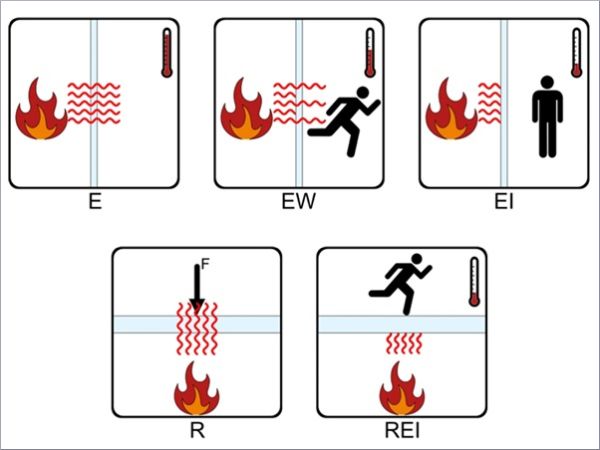
With the increasing use of glass as a structural material in modern architecture, ensuring fire resistance has become a critical challenge. Glass is no longer limited to façades—it is now widely used in load-bearing applications such as beams and fins. However, conventional glass beams show poor fire performance, making them unsuitable for structural fire safety requirements.
The Challenge
Studies show that traditional laminated glass beams typically fail within 5–25 minutes under fire conditions, with an average fire resistance of less than 25 minutes.
This is mainly due to:
Low thermal resistance of glass
Rapid temperature rise during fire exposure
Weak performance of interlayer materials (such as PVB)
As a result, standard glass beams often fail to meet R30 fire rating requirements.
Innovative Solution
To address this limitation, a new fire-resistant glass beam system has been developed.
The design includes:
A laminated load-bearing glass core
A fire-resistant gel layer
A tempered sacrificial glass panel
This protective system:
Delays heat transfer
Prevents early structural failure
Maintains transparency
Fire Test Results
Fire resistance tests were conducted under mechanical load and standard fire conditions.
Key findings include:
Fire resistance improved by over 200%
Achieved R30 fire rating
Core temperature remained significantly lower than furnace temperature
Structural deformation was delayed compared to unprotected beams
Unprotected beams failed at around 17 minutes, while protected beams maintained integrity for 30+ minutes.
Key Advantages
✔ Maintains structural integrity under fire
✔ Preserves transparency (no opaque coatings)
✔ Significantly delays heat transfer
✔ Suitable for modern architectural glass structures
Future Potential
Further optimization—such as increasing gel thickness or improving material combinations—could enable higher fire ratings like:
R45
R60
This opens new possibilities for safe, transparent, load-bearing glass structures in architecture.
Conclusion
The integration of fire-resistant gel and sacrificial glass layers provides an effective solution to enhance the fire performance of structural glass beams.
This innovation successfully bridges the gap between aesthetic transparency and fire safety, achieving reliable R30 fire resistance for load-bearing glass applications.