Butyl Extruder vs Two-Component Sealant Machine: Which One Do You Really Need?
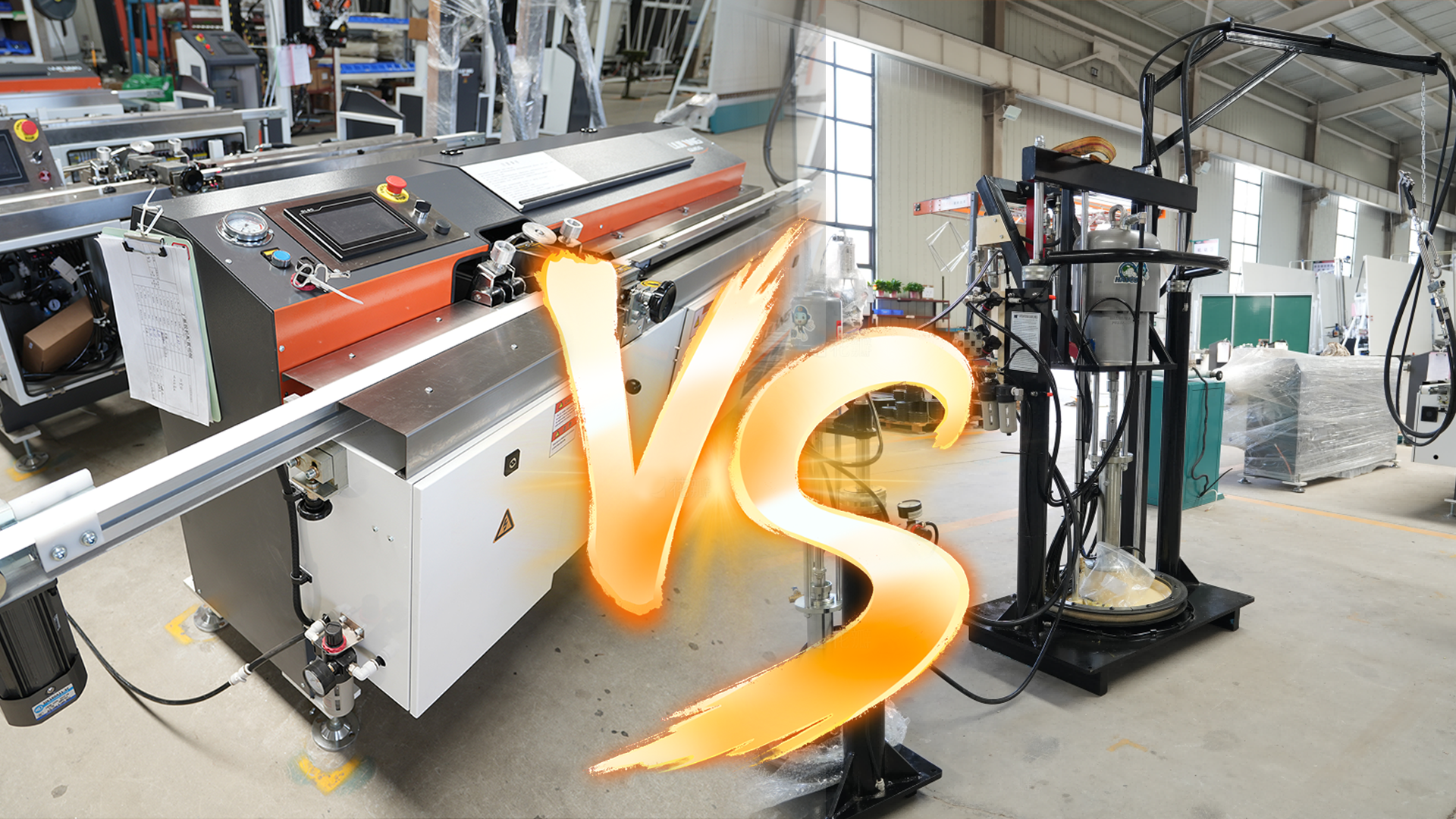
In the insulating glass (IG) production line, sealant quality directly decides the insulation performance, lifetime stability, and long-term durability of IG units. Two essential sealing technologies dominate modern production: Butyl Extruders and Two-Component Sealant Machines. Although both apply sealants, their working principles, application positions, and performance outcomes are very different. This article compares them in detail to help glass processors choose the most suitable sealing solution.
1. What Is a Butyl Extruder?
A Butyl Extruder (IG butyl coating machine) heats and extrudes polyisobutylene (PIB) onto the aluminum spacer.PIB is the first sealing layer of insulating glass—responsible for moisture resistance and gas retention.
Key Functions
Applies continuous hot-melt PIB on both sides of the spacer
Ensures airtight sealing for high-performance IG
Prevents water vapor penetration
Maintains argon gas retention over the long term
Typical Features
High-temperature heating (≈180–200°C)
Precision extrusion nozzles
Servo-controlled feeding
Automatic centering for uniform thickness
In short, A Butyl Extruder ensures the IG spacer has a perfect primary seal.
2. What Is a Two-Component Sealant Machine?
A Two-Component Sealant Machine mixes and applies 2K silicone or polysulfide sealants as the secondary structural seal of IG units.
Key Functions
Proportioning A/B sealant materials accurately
High-strength structural sealing
Long-term UV, weather, and temperature resistance
Ensures the mechanical stability of IG units
Typical Features
Automatic A/B ratio monitoring
High-pressure mixing system
Stable bead application
Suitable for large, façade-grade, and high-performance IG
In short, A 2K Sealant Machine strengthens the structure and ensures long-term durability.
3. Where They Are Used in the IG Unit?Process Machine Purpose Step 1: Butyl Extruder Primary moisture barrier on spacer Step 2: Assembly + Pressing Form IG unit Step 3: Two-Component Sealant Machine Secondary structural sealing around the perimeter
The machines complement each other—they are not substitutes.
4. Performance Comparison4.1 Purpose & Function
Butyl Extruder: Air-tightness + Moisture barrier
2K Sealant Machine: Strength + Long-term structural stability
4.2 Sealant Material
Butyl: Hot-melt PIB
2K Sealant: Polysulfide / Silicone
4.3 Operating Temperature
Butyl: High temperature
2K Sealant: Room temperature mixing
4.4 Effect on IG Quality
Butyl → Gas retention is important for energy efficiency
2K → Essential for wind-load performance of façade IG
5. Which Machine Should You Choose? Choose a Butyl Extruder if you need:
Standard IG production line
High-speed spacer coating
Stable PIB thickness
Excellent moisture barrier performance
Choose a Two-Component Sealant Machine if you:
Produce façade, curtain wall, architectural IG
Need high structural strength
Work with silicone or polysulfide
Manufacture jumbo-size glass
For complete IG production:
You must have both, because each performs a different seal.
6. Recommended Machines from LJ Glass Machinery
✔ LJTB01 Butyl Extruder
Suitable for all IG spacer types, stable extrusion, fast heating, and high coating uniformity.Internal link:https://www.ljglassmachinery.com/insulating-glass-butyl-extruder/
✔ LJQH Two-Component Sealant Extruder
Accurate A/B ratio control, automatic mixing, ideal for large architectural IG.Internal link:https://www.ljglassmachinery.com/two-component-sealant-machine/
7. Conclusion: Use Both for Best IG Performance
A Butyl Extruder and a Two-Component Sealant Machine are not competing technologies—they complete the sealing system of insulating glass.
Primary Seal (PIB): Airtightness, moisture barrier
Secondary Seal (2K): Strength, weather resistance, structure
To ensure high-quality IG units that meet international standards (EN1279 / IGCC), both technologies are essential.