Why Your IG Unit Has Sealant Leakage (Causes + Solutions)
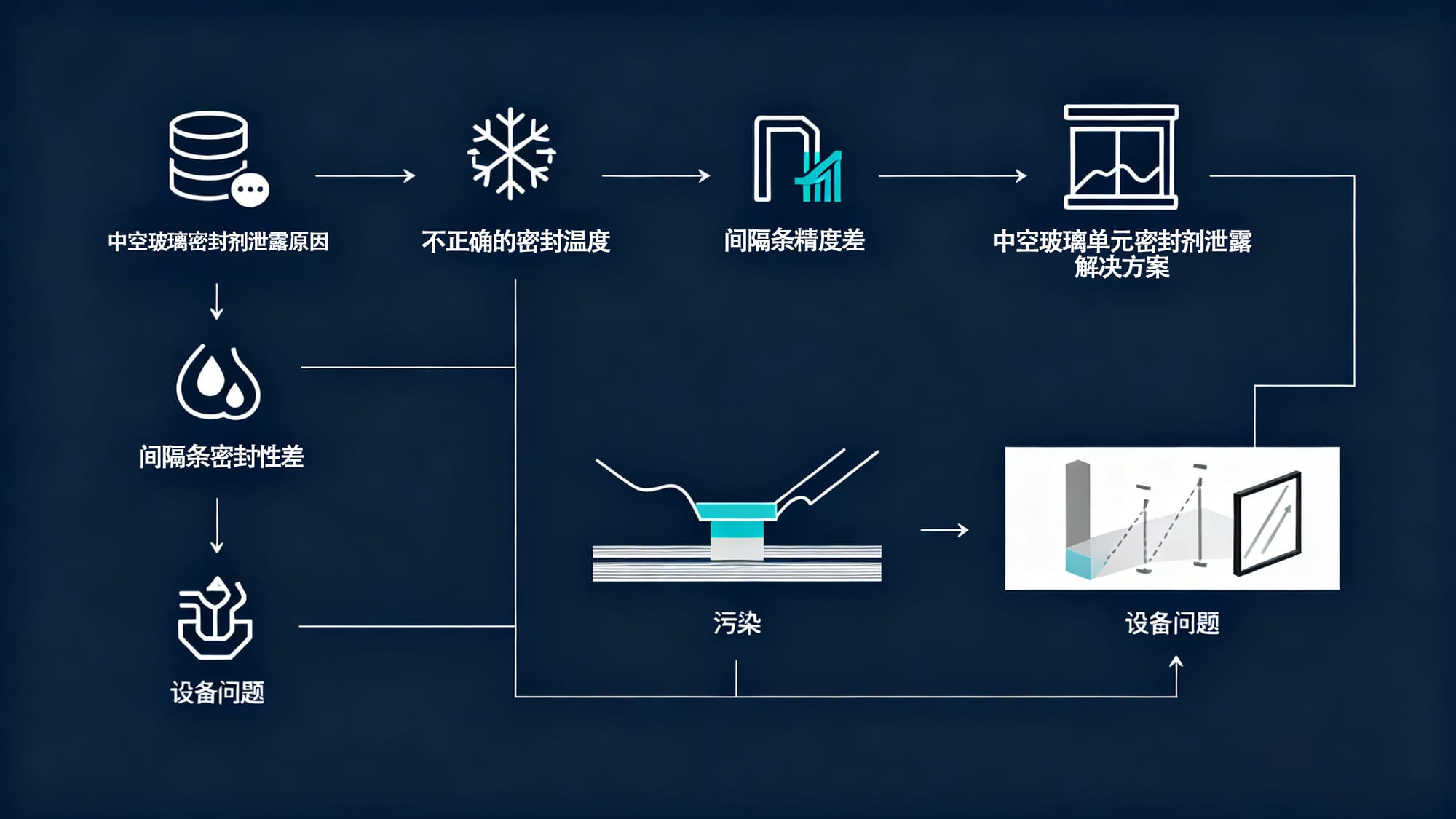
Insulated glass (IGU) sealant leakage is one of the most common and costly failures in IG production. Once the sealant spills, cracks, or separates, the insulation performance drops sharply, leading to fogging, air leakage, poor aesthetics, and customer complaints.This guide explains why IG units develop sealant leakage, how to diagnose each cause, and the most effective solutions to eliminate the problem in your factory.
1. Common Signs of Sealant Leakage in IG Units
You may notice one or more of the following:
- Sealant overflowing from the edges
- Gaps between sealant and aluminum spacer
- Uneven or messy sealing shape
- Air bubbles inside the sealant
- Corners not fully filled
- Sealant peeling off after a few days
- Sealant cracking during transportation or installation
These symptoms point to equipment, material, or process issues — all solvable once identified.
2. Major Causes of IG Sealant Leakage (Detailed Analysis)
2.1 Incorrect Viscosity or Temperature of Sealant
Symptoms
- Sealant too soft → flows and “leaks”
- Sealant too thick → cannot fill fully
Causes
- Butyl extruder temperature too low/high
- Two-component mixing ratio not correct
- Improper storage temperature
Solutions
- Keep butyl sealing temperature at ~180–200°C (depends on material)
- Maintain 2K mixing ratio at exact proportions (A:B = 10:1 or manufacturer requirement)
- Store sealant in dry, temperature-stable room (18–25°C)
2.2 Spacer Bending or Cutting Accuracy Problems
Symptoms
- Corners leaking
- Gap between spacer and glass
Causes
- Manual spacer bending errors
- Inconsistent 90° corner
- Incorrect length after cutting
Solutions
- Use automatic spacer bending machine for precise 90° corners
- Recalibrate cutting length
- Check spacer hardness before use
2.3 Uneven Glass Surface or Wrong Glass Size
Symptoms
- Sealant cannot fill the edge fully
- One side overflows, other side insufficient
Causes
- Glass size deviation ±1–2 mm
- Chips or defects on glass edge
- Uneven edge due to worn grinding wheel
Solutions
- Use an automatic cutting line with accurate servo control
- Recalibrate the glass cutting table
- Inspect and replace grinding wheels regularly
2.4 Contamination on Glass Surface (Very Common)
Symptoms
- Sealant cannot adhere
- Sealant peeling after days or weeks
Causes
- Oil stains from cutting fluid
- Dust on glass
- Dirty rollers in washing machine
Solutions
- Ensure washing machine brushes are clean
- Maintain water conductivity < 20 μS/cm
- Use oil-free air knives
- Keep glass away from dusty areas before sealing
2.5 Manual Sealing Errors
Symptoms
- Sealant line inconsistent
- Corners not filled
- Speed varies → sealant thickness uneven
Causes
- Operator skill issues
- Poor control of pressure & speed
- Fatigue during long production hours
Solutions
- Train operators regularly
- Set standard guideline: sealing speed 3–4 m/min
- Use robot sealing system to eliminate human error
2.6 Poor-Quality or Expired Sealant
Symptoms
- Sealant looks watery or separated
- No bonding strength
Causes
- Expired material
- Low-cost formulations with unstable components
Solutions
- Use certified brands (HB Fuller, Dow Corning, Kommerling, etc.)
- Rotate inventory FIFO (First In, First Out)
- Check batch numbers before use
2.7 Speed Mismatch Between Line Processes
Symptoms
- Sealant spills at corners
- Sealant squeezed due to timing mismatch
Causes
- Pressing section too fast or too slow
- Sealant not cured enough before pressing
- Manual transfer too slow
Solutions
- Match pressing machine speed to sealing speed
- Ensure sealant has initial shape before pressing
- Keep product flow consistent to avoid delays
3. Equipment-Related Reasons for Sealant Leakage
3.1 Butyl Extruder Problems
- Temperature sensors inaccurate
- Nozzle worn out
- Pressure fluctuations
Fix:
- Replace heating elements annually
- Clean nozzle every shift
- Calibrate PID temperature control
3.2 Two-Component Sealant Machine Problems
- A/B ratio wrong
- Mixer clogged
- Pump pressure unstable
Fix:
- Calibrate ratio daily
- Replace static mixing tube often
- Check pump seals
3.3 Manual Sealing vs Robot Sealing
Manual sealing:
- Uneven
- Depends on experience
- Higher scrap rate
- More leakage
Robot sealing:
- Perfect edge consistency
- Accurate corner filling
- Stable pressure
- Almost zero leakage rate
→ If your factory has repeated leakage issues, upgrading to an IG sealing robot is the most effective long-term solution.
4. Best Practices to Avoid IG Sealant Leakage Permanently
✔ Maintain stable temperature & humidity
Environment: 18–25°C, humidity < 60%.
✔ Use automatic equipment for critical steps
- Spacer bending
- Sealing
- Pressing
✔ Build a quality-control checklist
Before pressing, check:
- Spacer alignment
- Sealant thickness
- Corner filling
- Glass size
- Surface cleanliness
✔ Replace consumables on schedule
- Mixer tubes
- Brushes
- Filters
- Cutting wheels
✔ Keep detailed production logs
Track issues → helps find root causes faster.
Conclusion
Sealant leakage in IG units is avoidable once the root causes—equipment, materials, or processes—are identified. By implementing standardized procedures, upgrading key equipment, and maintaining consistent quality control, manufacturers can drastically reduce sealing defects and improve production efficiency.