Glass Industry Trends 2026: AI, Decarbonization, and Smart Manufacturing Reshaping the Future
Published by LIJIANG Glass Machinery
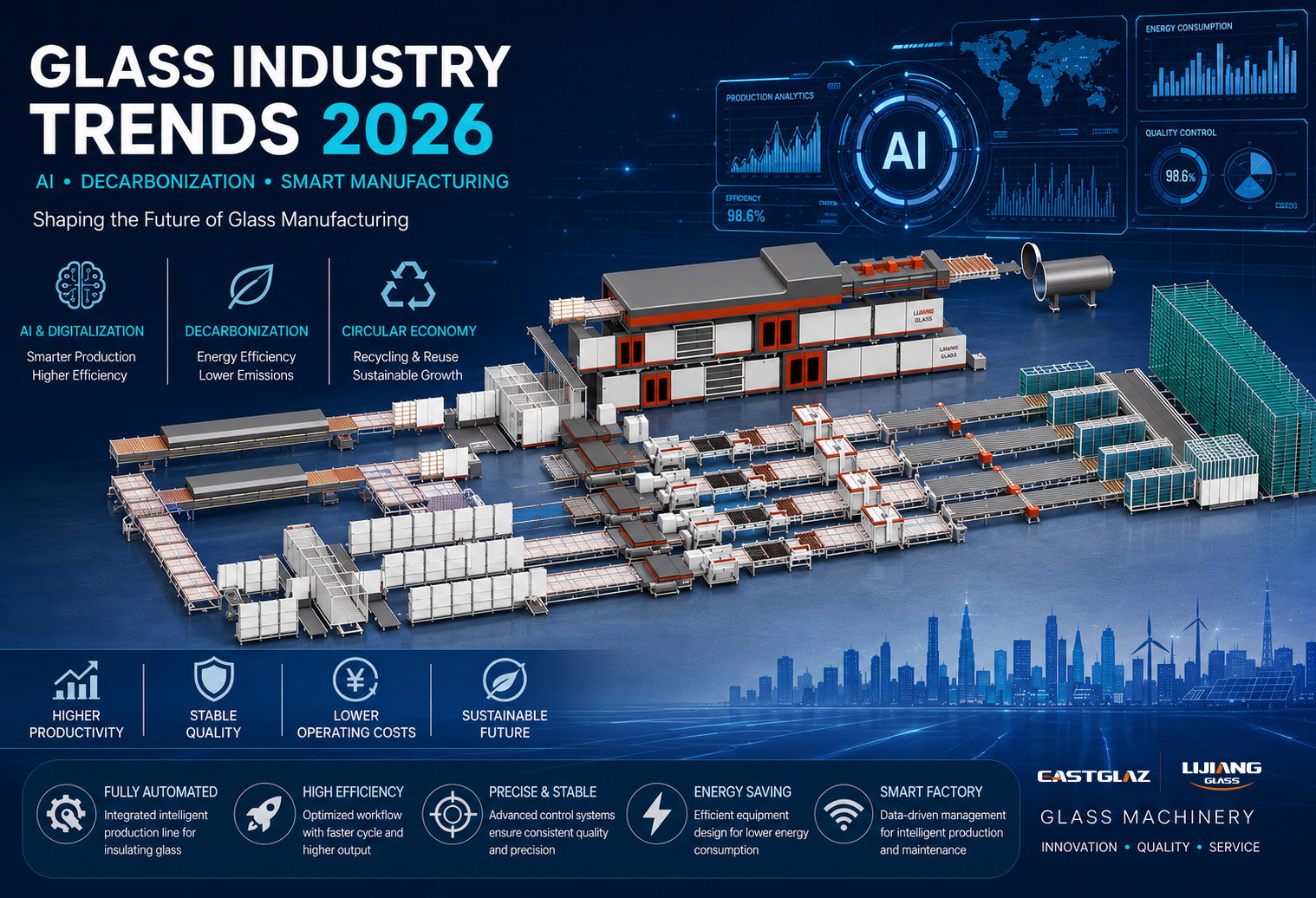
Date: June 2026 The global glass industry is entering a new era of transformation. As manufacturers face rising energy costs, stricter environmental regulations, and increasing demands for product quality and automation, three key trends are emerging as the driving forces behind industry development: Artificial Intelligence (AI) & Digital Technologies, Decarbonization, and Circular Economy. These topics are expected to dominate discussions at the upcoming glasstec 2026, the world's leading trade fair for the glass industry. For glass processing companies, these trends are no longer future concepts—they are becoming essential strategies for maintaining competitiveness and achieving sustainable growth.
AI and Smart Manufacturing Are Accelerating Glass Production
Digital transformation is rapidly changing the way glass is manufactured and processed. Modern factories are increasingly integrating intelligent software, sensors, machine connectivity, and real-time data analysis to improve productivity and reduce operational costs. AI-powered systems help manufacturers optimize production parameters, reduce waste, predict equipment maintenance needs, and improve product quality consistency. In the insulating glass industry, automation has become a key competitive advantage. From automatic glass loading and cutting to spacer bending, molecular sieve filling, insulating glass assembly, and robotic sealing, smart production lines are helping manufacturers achieve higher efficiency with fewer labor requirements. At LIJIANG Glass Machinery, intelligent control systems have already been integrated into many equipment solutions, including:
- Automatic Insulating Glass Production Lines
- CNC Spacer Bending Machines
- Automatic Desiccant Filling Machines
- Two-Component Sealing Robots
- Automatic Glass Loading and Cutting Systems
By connecting multiple production processes into a unified workflow, manufacturers can improve productivity, minimize errors, and enhance overall production management.
Decarbonization Becomes a Core Industry Challenge
Glass production remains one of the most energy-intensive industrial processes. As global sustainability goals continue to evolve, reducing carbon emissions has become a major priority throughout the glass value chain. The industry is exploring solutions such as energy-efficient equipment, improved furnace technologies, electrification, renewable energy integration, and increased use of recycled glass materials. While primary glass manufacturing focuses heavily on furnace technologies, glass processing companies can also contribute significantly to carbon reduction through:
- Energy-efficient production equipment
- Reduced material waste
- Optimized production workflows
- Automated quality control systems
- Lower maintenance and downtime rates
High-efficiency insulating glass production equipment plays a particularly important role by supporting the manufacture of energy-saving architectural glass used in modern buildings worldwide.
Circular Economy Creates New Opportunities
The circular economy is becoming a strategic focus across the glass industry. Glass is one of the few materials that can be recycled repeatedly while maintaining its quality. Increasing the use of recycled glass helps reduce raw material consumption, lower energy requirements, and decrease CO₂ emissions. For glass processors, sustainability extends beyond recycling. It also includes:
- Reducing production waste
- Improving material utilization rates
- Extending equipment lifespan
- Enhancing production efficiency
- Supporting the manufacture of high-performance insulating glass units (IGUs)
As energy-efficient buildings continue to gain popularity worldwide, demand for high-quality insulating glass is expected to increase significantly, creating new opportunities for IGU manufacturers.
What Does This Mean for Glass Processors?
The future of the glass industry will not be defined solely by production capacity. Success will increasingly depend on a company's ability to embrace automation, improve energy efficiency, and adopt sustainable manufacturing practices. Manufacturers investing today in smart production technologies, automated equipment, and efficient insulating glass solutions will be better positioned to meet future market demands while maintaining profitability.LIJIANG Glass Machinery remains committed to supporting glass processors worldwide through innovative equipment solutions designed to improve productivity, reduce operating costs, and contribute to a more sustainable glass industry. As the industry moves toward a smarter and greener future, automation, digitalization, and energy efficiency will continue to shape the next generation of glass manufacturing.