Why Glass Defects Should Be Detected Before IGU Assembly
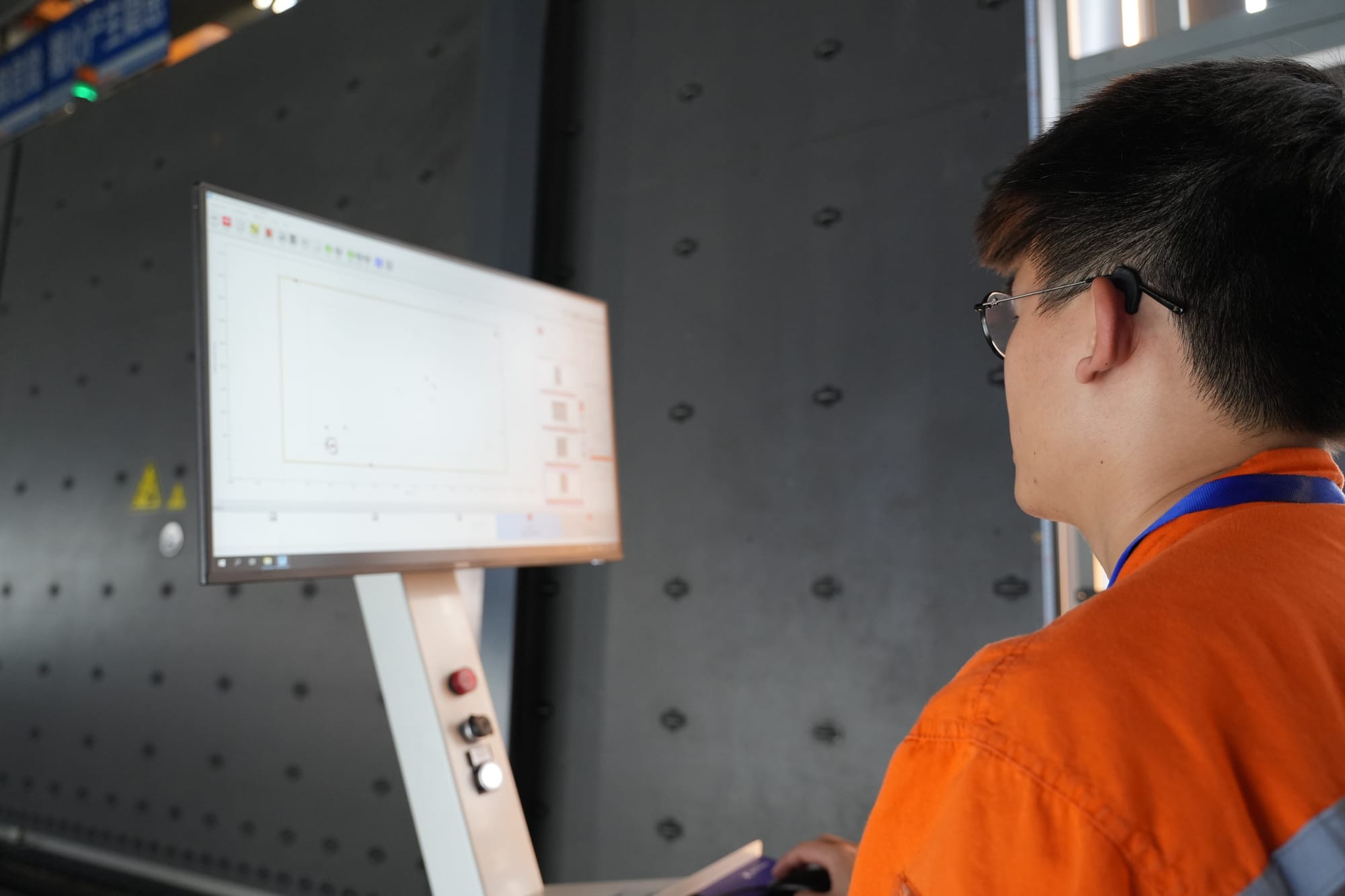
As insulating glass production becomes faster and more automated, manufacturers are paying greater attention to where quality inspection should take place. Traditionally, many factories rely on operators to inspect glass manually after washing or check the finished insulating glass unit at the end of production. However, if scratches, stains, edge damage, or coating defects are discovered only after spacer placement, pressing, gas filling, and sealing, the factory may have to reject the entire IGU. For this reason, detecting glass defects after washing and before IGU assembly is becoming an important quality-control strategy for modern insulating glass manufacturers.
Why the Inspection Position Matters
An insulating glass unit contains more than two panes of glass. It also requires spacers, desiccant, butyl sealant, insulating gas, and secondary sealant. If a defective pane enters the assembly process, all these additional materials and production steps may be wasted. Consider a glass pane with a visible scratch. If the defect is found immediately after washing, the factory only needs to replace the affected pane. If it is found after the complete IGU has been pressed and sealed, the manufacturer may need to discard or remake the entire unit. Inspection before assembly therefore helps manufacturers move quality control upstream, where defects can be handled at a lower cost.
Common Glass Defects Found After Washing
The washing and drying stage provides an important inspection opportunity because the glass surface is clean and ready for assembly. Common defects found at this stage include:
- Surface scratches
- Bubbles and inclusions
- Edge chips or small cracks
- Water stains
- Oil marks and fingerprints
- Dust or other surface contamination
- Low-E coating defects
- Incorrect glass orientation
- Residual dirt after washing
Some defects may originate from the raw glass, while others can be caused by cutting, edging, handling, conveying, or washing. Identifying them before IGU assembly prevents defective panes from continuing through the remaining production process.
Why Manual Inspection Is Not Always Enough
Manual visual inspection remains useful, especially when processing special glass or small production batches. However, it becomes more difficult to maintain consistent inspection results on a high-speed production line. Manual inspection can be affected by:
- Operator experience
- Visual fatigue
- Production-line speed
- Different lighting conditions
- Defect size and position
- Changes between work shifts
- Subjective quality judgment
Transparent and coated glass can also be difficult to inspect because some defects are only visible under a particular lighting angle or background. As production speed increases, operators may have only a few seconds to inspect each pane. Small scratches, inclusions, or edge defects can therefore be missed before the glass enters the assembly section.
Automated Glass Inspection After Washing
An automatic glass inspection system uses industrial cameras, controlled lighting, and machine-vision software to inspect glass while it moves through the production line. After the glass exits the washing and drying section, the inspection system captures images of the glass surface and edges. The software analyzes the images and identifies defects that meet the configured inspection criteria. Depending on the production requirements, the system may detect:
- Scratches
- Cracks
- Bubbles
- Inclusions
- Coating damage
- Edge defects
- Surface contamination
- Other visible imperfections
The inspection results can be displayed to the operator or connected with the production control system. When an unacceptable defect is detected, the affected glass can be marked, removed, or redirected before IGU assembly.
Five Benefits of Detecting Defects Before Assembly
1. Lower Material Waste
Rejecting one defective pane is less expensive than rejecting a completed insulating glass unit. Early detection helps save spacers, desiccant, butyl, secondary sealant, and insulating gas that would otherwise be used on an unacceptable product.
2. Less Rework
Finding defects at the end of production can require the IGU to be removed, remade, and placed back into the production schedule. Inspection before assembly reduces repeated processing and helps avoid delivery delays.
3. More Consistent Quality
An automatic inspection system applies the same detection criteria to every pane. This reduces differences caused by operators, shifts, and inspection conditions.
4. Higher Production Efficiency
Automated inspection can operate continuously at production-line speed without creating an additional manual inspection bottleneck.
5. Better Production Traceability
When connected with barcode or ERP systems, inspection results can be linked to an individual glass pane, customer order, or finished IGU. This gives manufacturers a clearer record of when and where a defect was identified.
Supporting Digital Quality Traceability
Modern glass inspection is moving beyond simple pass-or-fail decisions. Inspection systems can generate production data that helps factories analyze recurring quality problems. For example, repeated scratches in the same position may indicate an issue with a conveyor roller. Frequent water stains may point to washing-water quality, brush condition, or drying performance. A digital quality record may contain:
- Order number
- Glass identification code
- Glass dimensions
- Glass type and thickness
- Inspection date and time
- Defect type
- Defect size and position
- Inspection result
- Production-line information
By reviewing this data, managers can identify defect patterns and correct the production process instead of repeatedly dealing with finished-product rejection.
Where Can an Inspection System Be Installed?
The installation position should be selected according to the factory layout and production process. An automatic glass inspection system can typically be integrated:
- After a vertical glass washing and drying machine
- Before spacer placement and IGU assembly
- After an insulating glass pressing section
- After a horizontal glass washing machine
- Within an existing continuous glass processing line
For insulating glass production, installation after washing and before assembly is particularly valuable because it prevents defective glass from entering the most material-intensive stages of production. Inspection after pressing may also be used as an additional quality-control step, depending on the required production standard.
LIJIANG GlassInspector for IGU Production
LIJIANG Glass Machinery provides the GlassInspector automatic glass inspection system for integration with vertical washing machines, horizontal washing machines, and insulating glass production equipment. Using high-resolution industrial cameras, optimized lighting, and intelligent image-processing technology, the system can detect common surface and edge defects during continuous production. Key capabilities include:
- Online real-time glass inspection
- Surface and edge defect detection
- Detection of defects as small as approximately 0.5 mm under suitable system configurations
- Compact installation design
- Integration with existing production lines
- ERP and barcode connection
- Automatic glass identification and classification
- Customized inspection configurations
The system helps manufacturers replace inconsistent manual checking with a more stable and data-based inspection process.
Building a Complete IGU Quality-Control Process
Glass inspection alone cannot guarantee the quality of a finished insulating glass unit. It should be combined with stable control throughout the complete production process. A modern IGU quality-control workflow may include:
- Accurate glass cutting and edge processing
- Low-E coating identification and edge deletion
- High-quality glass washing and drying
- Automatic glass defect inspection
- Accurate spacer preparation
- Consistent butyl application
- Controlled IGU assembly and pressing
- Stable online argon gas filling
- Automatic secondary sealing
- Barcode and ERP production tracking
Connecting these stages helps the factory control both the appearance and manufacturing consistency of every IGU.
What Should Manufacturers Evaluate?
Before selecting a glass inspection system, manufacturers should confirm:
- Maximum and minimum glass dimensions
- Glass thickness range
- Production-line speed
- Types of glass being processed
- Low-E and coated-glass requirements
- Minimum defect size that must be detected
- Required defect classifications
- Available installation space
- Connection with existing machinery
- ERP and barcode integration requirements
The system should be configured according to the actual production environment. Different factories may require different cameras, lighting arrangements, detection standards, and installation positions.
Conclusion
As insulating glass production becomes more automated, quality inspection must also move closer to the production process. Detecting defects after washing and before IGU assembly helps manufacturers reduce material waste, avoid unnecessary rework, and improve production consistency. When inspection data is connected with barcode and ERP systems, factories can also establish a traceable quality-management process. For glass manufacturers planning a new IGU line or upgrading an existing factory, automated inspection should be considered during the initial production-line design rather than added only after quality problems appear.LIJIANG Glass Machinery provides automatic insulating glass production lines, glass washing and drying machines, GlassInspector systems, online argon gas filling, sealing robots, and complete glass factory solutions. Contact LIJIANG Glass Machinery to configure a glass inspection and IGU production solution for your factory.