How to Produce Stepped Insulating Glass for Modern Curtain Wall Projects
Modern architectural façades are becoming larger, cleaner and more visually sophisticated. As architects pursue frameless curtain walls, concealed framing systems and customized façade structures, stepped insulating glass has become an important product for architectural glass manufacturers.
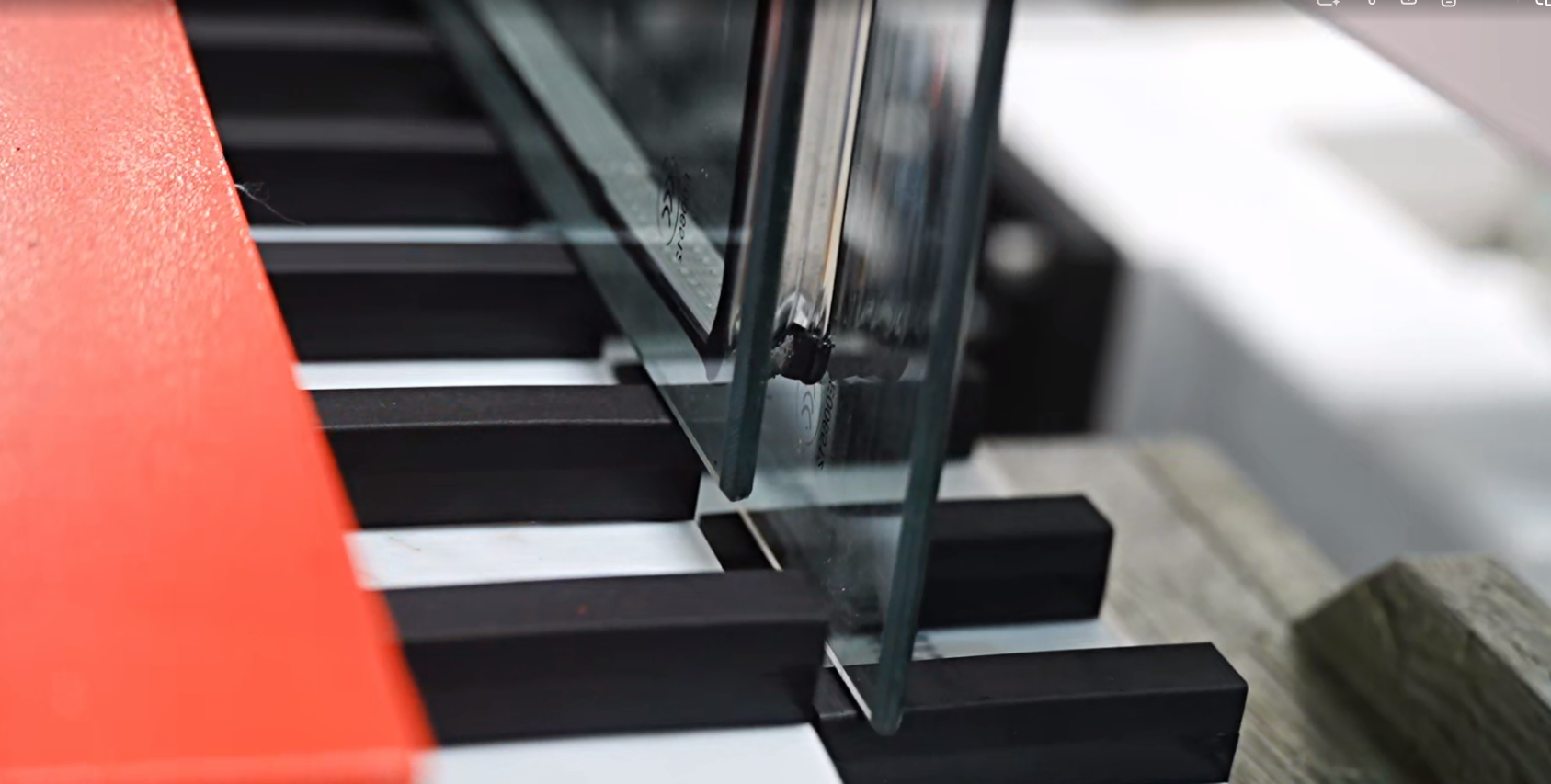
Unlike standard insulating glass units, stepped insulating glass requires one glass pane to extend beyond another on one or more sides. This special construction creates additional challenges in glass positioning, pressing, conveying and secondary sealing.
For glass processors, producing high-quality stepped IGUs requires more than a conventional double glazing production line. Accurate positioning, stable glass support and intelligent sealant control are essential.
What Is Stepped Insulating Glass?
Stepped insulating glass, also known as stepped IGU or offset insulating glass, is an insulating glass unit in which the edges of the two glass panes are not completely aligned.
Depending on the façade design, the unit may have:
One-side stepped glassTwo-side stepped glassThree-side stepped glassFour-side stepped glassDifferent step dimensions on each sideDouble, triple or customized glass structures
The extended glass edge can conceal structural components, connect with façade systems or create a continuous glass appearance.
Stepped insulating glass is commonly used in:
Structural glazingFrameless glass façadesCommercial curtain wallsSkylights and glass roofsGlass entrancesHigh-end architectural projectsCustomized window and façade systemsWhy Is Stepped IGU Production More Difficult?
A standard insulating glass unit normally has two aligned glass panes. Its spacer positioning, pressing and sealing paths are relatively straightforward.
For stepped insulating glass, the production equipment must recognize and control the offset between the panes. Several technical issues must be considered.
1. Accurate Glass Positioning
The second glass pane must be positioned according to the specified step dimensions. Even a small positioning error can affect the final unit size, sealant depth and façade installation.
An automatic IGU production line should accurately measure the glass and control the positioning of three-side or four-side stepped units.
2. Stable Conveying
Stepped glass has an uneven edge structure. Conventional conveying systems may not provide sufficient support, especially when processing large, heavy or triple-glazed units.
A stable double-beam conveying structure helps reduce glass movement and supports the unit during transfer.
3. Controlled Pressing
The pressing system must apply even and controlled pressure without disturbing the offset position of the two panes.
Servo-controlled pressing and multiple pressure points can improve alignment and help maintain consistent IGU thickness.
4. Automatic Sealing Path Recognition
The sealing path of stepped insulating glass is different from that of a standard rectangular IGU. The sealing robot must identify the glass edges, step position, spacer width and required sealant depth.
The system must then adjust the sealing head automatically to maintain a continuous seal around the complete unit.
Recommended Production Process
A complete stepped insulating glass production process normally includes:
Glass cutting and edge processingLow-E coating edge deletion, when requiredGlass washing and dryingSpacer bending and desiccant fillingButyl coatingSpacer frame positioningAutomatic glass assemblyStepped glass positioningPanel pressing and optional argon gas fillingAutomatic secondary sealingFinal quality inspection
Each stage affects the dimensional accuracy and sealing quality of the finished IGU.
For factories processing different order sizes, the equipment should be able to switch efficiently between standard IGUs, stepped units, triple glazing and shaped glass.
Automatic IGU Line for Stepped Glass Production
A suitable automatic insulating glass production line can significantly reduce manual positioning and improve product consistency.
Important functions include:
Automatic glass size detectionLow-E glass surface detectionServo-controlled glass positioningThree-side and four-side stepped glass processingDouble and triple glazing productionOnline argon gas fillingAdjustable pressing parametersERP and barcode integrationStable conveying for large and heavy glassProduction data recording
For sensitive Low-E glass, an air-floating conveying and support system can also help reduce scratches and roller marks during processing.
Automatic Sealing Robot for Stepped IGUs
Secondary sealing is one of the most critical stages in stepped insulating glass production.
Manual sealing depends heavily on operator experience and may result in uneven sealant depth, incomplete corners or inconsistent appearance. These risks become greater when the step dimensions vary between different orders.
An automatic insulating glass sealing robot can detect the edge structure and automatically adjust its sealing movement.
The system can provide:
Automatic glass edge detectionAdjustable sealing depth and widthContinuous corner sealingPrecise sealant output controlProcessing of stepped and shaped glassCompatibility with silicone or polysulfide sealantStable conveying through a double-beam structureReduced bubbles and incomplete sealingConsistent finished-edge appearance
For structural glazing projects, silicone sealant is generally selected according to the project design and sealant supplier’s technical requirements.
What Information Should Buyers Provide?
Before selecting a stepped insulating glass production line, glass manufacturers should provide the equipment supplier with the following information:
Maximum and minimum glass dimensionsIndividual glass thicknessTotal IGU thicknessMaximum unit weightDouble or triple glazing requirementsMaximum step widthNumber of stepped sidesExpected daily production capacityLow-E glass typeRequired gas-filling methodSilicone or polysulfide sealantAvailable workshop dimensionsFactory power supply
Providing actual product drawings is especially helpful. The equipment manufacturer can then evaluate the positioning method, conveying structure and sealing path according to the real glass configuration.
A Complete Solution from LIJIANG Glass
LIJIANG Glass provides automatic insulating glass production equipment for window, curtain-wall and architectural glass manufacturers.
The solution can include:
Automatic glass loading and cuttingVertical Low-E edge deletingAutomatic glass washing and dryingSpacer bending and desiccant fillingButyl extruder coatingAutomatic IGU assembly and pressingOnline argon gas fillingAutomatic stepped glass positioningInsulating glass sealing robotGlass quality inspectionERP and production-data integration
Equipment configurations can be customized according to glass size, product structure, capacity requirements and available workshop space.
From production-line planning to installation, commissioning, operator training and after-sales support, LIJIANG Glass helps manufacturers build a more stable and efficient insulating glass production system.
Upgrade Your Stepped Glass Production
Stepped insulating glass is no longer limited to a small number of special façade projects. As architectural designs become more customized, glass processors need flexible equipment capable of handling both standard and non-standard IGUs.
The right combination of an automatic IGU production line and an intelligent sealing robot can improve positioning accuracy, sealing consistency and production efficiency.
Contact LIJIANG Glass and send us your glass drawings, required step dimensions, production capacity and workshop layout. Our technical team will recommend a suitable stepped insulating glass production solution for your factory.
Email: lijiangglass.cn@gmail.com
Phone/WhatsApp: +86 186 7887 5966
Website: www.ljglassmachinery.com
FAQ
What is stepped insulating glass?
Stepped insulating glass is an IGU in which one glass pane extends beyond another on one or more sides. It is commonly used in curtain walls, structural glazing and frameless façade systems.
Can an automatic IGU line produce four-side stepped glass?
Yes. A properly configured automatic insulating glass production line can position and press three-side or four-side stepped glass according to the required dimensions.
Can an automatic sealing robot seal stepped IGUs?
Yes. An intelligent sealing robot can detect the glass edge and adjust the sealing path, sealant depth and sealant output for stepped insulating glass.
Which sealant is suitable for stepped insulating glass?
Silicone or polysulfide sealant may be used depending on the IGU structure and application. Structural glazing projects commonly require silicone sealant that meets the project’s technical specifications.
What information is required before selecting the equipment?
Buyers should provide glass dimensions, thickness, IGU structure, step dimensions, number of stepped sides, daily capacity, sealant type, workshop size and power supply.